
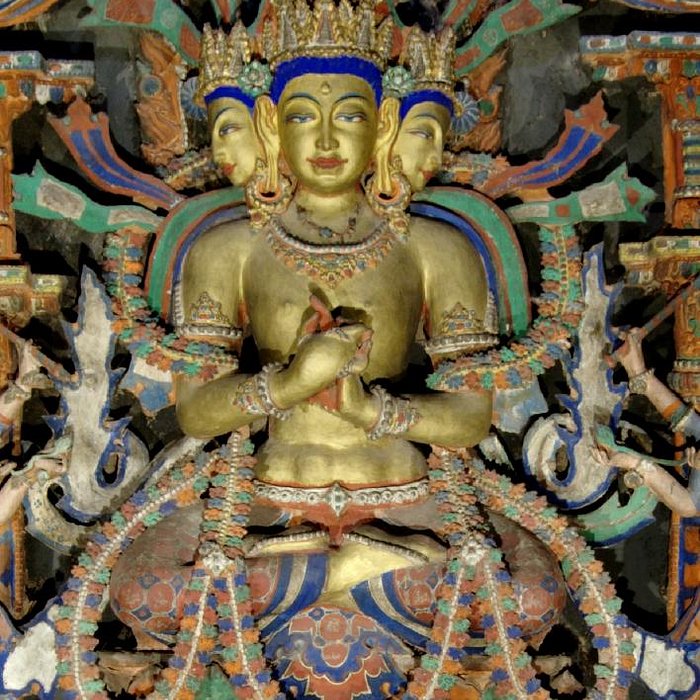
The Legend of Sumda Chun. Sixty-five kilometres southwest of Leh, past the point where the road gives way to a footpath along the Sumda river, sits a temple that most visitors to Ladakh will never see. That is, in a sense, the entire story.
A night, three temples
The founding legend of Sumda Chun credits Lotsawa Rinchen Zangpo, the great translator-monk who worked across the Western Himalaya between 957 and 1055 CE, with building the temple in a single night — alongside two others, at Alchi and Mangyu. Rinchen Zangpo is remembered locally as the founder of as many as 108 temples spanning present-day India, Nepal and Tibet, and the three built together are said to form a pilgrimage circuit that devotees still attempt to walk in one day: Sumda, Mangyu, Alchi.
Alchi, reachable by road and folded into most Ladakh itineraries, has become the famous sibling. Sumda Chun has not — and that omission turns out to be worth investigating rather than lamenting.
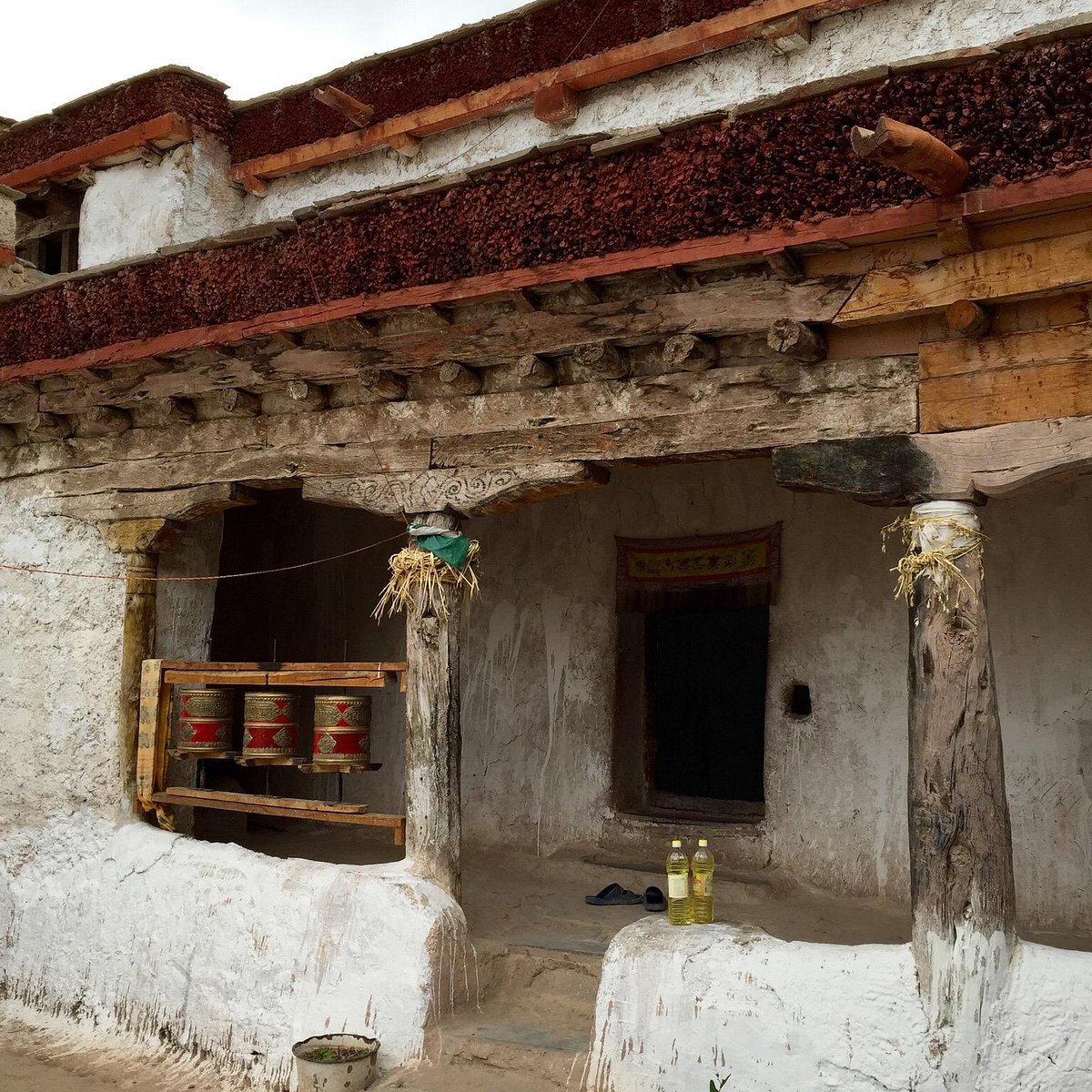
Sumda Chun sits at roughly 3,500 metres and remains one of the more difficult of Rinchen Zangpo's foundations to reach on foot.
The Village · click to enlarge
What survived, and why
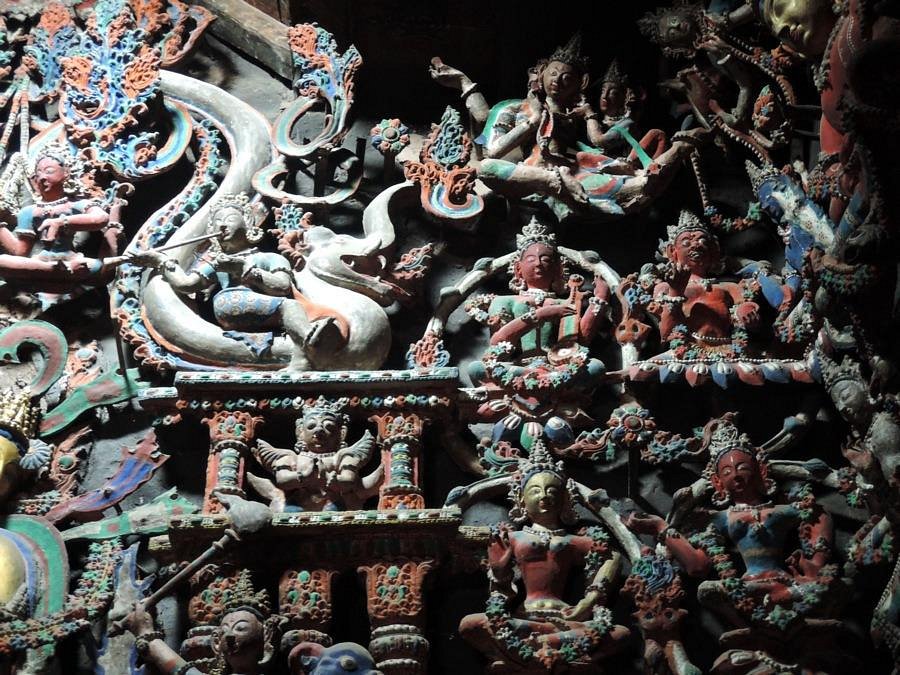
The reason art historians travel to Sumda Chun has little to do with legend and everything to do with what is still standing inside the assembly hall. Christian Luczanits, the leading scholar of early Western Himalayan clay sculpture, has documented that the shrine retains all but one of the original figures from its Vajradhatu mandala — a level of completeness rarely found elsewhere in Ladakh. The hall itself, dated by art historians to the late 12th or early 13th century, preserves its original back wall and left side wall, along with early wall paintings that place it among a small handful of Ladakhi temples surviving in something close to their original form.
Its inaccessibility is precisely why the original fabric is still standing while more reachable sites were rebuilt.
That is the quieter argument for Sumda Chun, and the one that separates it from a listicle entry. Temples on the beaten path get renovated, repainted, and modernised by well-meaning custodians responding to footfall. Sumda Chun, three to four hours up a river valley trail from the nearest motorable road, was largely left alone. Its difficulty is its preservation.
Twenty-first century rescue
By 2006, that same isolation had become a liability, and what followed was a five-year effort to save what the mountains alone could no longer protect.
Most accounts still describe the final stretch to Sumda Chun as a walk rather than a drive — worth confirming locally before you plan a day trip.
The Approach · click to enlarge
Planning the pilgrimage
For a guest at Kesaar Palace weighing whether to attempt Sumda Chun, the honest answer is: it depends how far past the roadside stops you are willing to go. This is not a monastery you glimpse from a moving vehicle. It rewards a full day, sturdy footwear, and, ideally, a local guide who can confirm the current state of the trail before you set out — road access in this corner of Ladakh has a way of changing from one season to the next.
What you find at the end of it is not a restored showpiece built for tour buses, but something closer to what Rinchen Zangpo's original foundations may actually have looked like — modest, weathered, and, against considerable odds, still exactly where it was left.
