The Song Collector
Morup Namgyal spent thirty years walking to villages across Ladakh with a tape recorder. In 2002 the building holding all of it burned down. He went back out and started again.
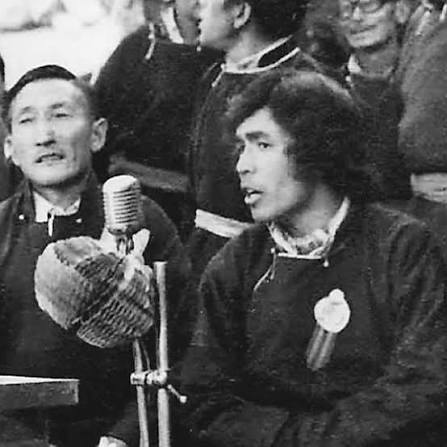
If you hear a folk song at a wedding in Leh this summer, there is a reasonable chance it survives because one man walked to the village it came from and asked someone to sing it into a microphone.
Morup Namgyal was born in Wanla in 1947, the same year the country was. He spent a thirty-year career at All India Radio Leh — for a long time the only radio station in Ladakh — and in that time built an archive of more than a thousand Ladakhi folk songs. There was nothing else like it anywhere in the region. In a society that had carried its history orally for centuries, it was the closest thing to a written record the songs had ever had.
Ladakhis call him the Song Collector, which undersells the walking. The fieldwork was done on foot, across hundreds of miles of a region where the roads were new and mostly went somewhere else.
In 2002 the old wooden radio station in Leh caught fire. The archive was inside it. Thirty years of tape — songs recorded from singers who by then were elderly, and in many cases the only recording that had ever been made of them — went in a single night.
A handful of recordings survived, because they had left the building. Five tracks that Sublime Frequencies later released on the album Where the Mountains Meet the Sky, recorded in 1992, are among the few things the fire did not reach.
He was fifty-five years old. He went back out and did it again.
Leh, 2002That is the part of this story that most accounts skip past. By the time the documentary about him was made, he had documented somewhere in the region of thirteen hundred songs across more than four decades of fieldwork. The second number only means anything once you know about the first.
Travel restrictions on Ladakh were lifted in 1974, and the region opened to the outside in a way it had not been before. Namgyal's response was not to withdraw. He formed cultural troupes with other artists and toured the region staging song and dance performances, with an explicit aim: to make Ladakhis proud of being Ladakhi at exactly the moment when a great deal of new influence was arriving at once.
That touring turned into something more durable. It fed directly into the founding of the Lamdon Social Welfare Society and Lamdon School, which he co-founded and which remains one of the institutions carrying Ladakhi cultural education. He has worked in theatre as well, staging historical drama drawn from local material. He stood for the Assembly from Lingshed once, without success.
He has also used songs as argument. One he sang in 1964 makes a case against mixing religion with politics — telling Ladakhis, in effect, that Buddhist and Muslim are brothers and should walk forward together. It is not a museum piece. It is a position, sung.
In 2004 the Government of India gave him the Padma Shri for his contribution to Indian music.
What is easy to miss in a list of achievements is how deliberate the whole shape of it was. Namgyal was not a collector by temperament, accumulating for its own sake. The recordings, the touring troupes, the school, the drama — each part aimed at the same thing, which was making sure Ladakhis had their own culture available to them in a usable form at the moment when a great deal was arriving from outside at once. The archive was a method. It was never the point.
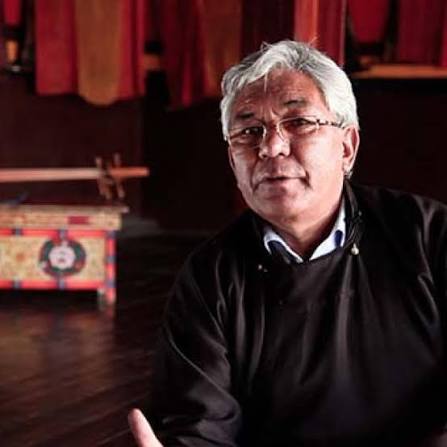
The documentary The Song Collector, directed by Erik Koto over six years and eight trips to Ladakh, follows three generations of one family. Namgyal learned these songs from his own grandfather. In the film he is teaching them to his grandson, Nono, the same way — in the living room, then at weddings, then walking to the monuments and sites the songs are about so the boy learns what the words are describing.
The film frames the whole question — tradition against development, and what a place gives up when it modernises quickly — through the Buddhist idea of the middle path. Which is a more useful frame than the one usually applied to Ladakh from outside, where the choice is presented as preservation or progress and someone has to lose.
More recently his collected songs about mountains, glaciers, rivers and streams were published as Singing Ice, made with researchers Susan Schuppli and Faiza Ahmad Khan together with Local Futures Ladakh, translated from Ladakhi by Tashi Morup. The book is meant to be sung aloud rather than read silently.
It is worth sitting with what that collection actually is. Songs recorded decades ago, describing glaciers and streams by name, in a region where the glaciers are now measurably retreating and villages downhill of them are building artificial ones to get through the spring. The archive turns out to be climate documentation that nobody set out to make.
For guests who would rather listen to Ladakh than photograph it.
A Ladakhi folk musician, composer and dramatist, born in Wanla in 1947, known as the Song Collector of Ladakh. Over a thirty-year career at All India Radio Leh he recorded an archive of more than a thousand Ladakhi folk songs. He co-founded the Lamdon Social Welfare Society and Lamdon School, and received the Padma Shri in 2004.
The wooden All India Radio building in Leh burned down in 2002 and the archive was destroyed with it. A small number of recordings survived because they had already been released elsewhere, including material on the Sublime Frequencies album Where the Mountains Meet the Sky. He began rebuilding the collection afterwards.
Weddings, village celebrations and monastery festival days are where it is still performed in its own setting rather than staged for an audience. Outside those occasions, the Sublime Frequencies recordings and the documentary are the most direct route in.
A documentary by Erik Koto, shot over six years, following Namgyal and his grandson Nono as the songs pass between generations. It uses the Buddhist idea of the middle path to frame the tension between preserving Ladakhi culture and the pace of development in the region.
Ladakh is usually photographed and rarely listened to. If you are staying with us during a festival or a wedding season and want to hear the music where it belongs rather than where it is performed for visitors, ask at the front desk. Hotel Kesaar Palace is on Fort Road in Leh.
