
The Ladakhi Actor
Phonsok Tsering Dimbir left Ladakh for the Film and Television Institute of India in the early 1970s. Bollywood gave him struggle. Television, music, filmmaking and teaching gave him something larger.

Before Ladakh had its own film industry, before it had the cinema culture that visitors now take for granted, a young man from Chemrey decided that he wanted to act.
In 1972, at nineteen, Phonsok Tsering Dimbir left for the Film and Television Institute of India in Pune. He had grown up with radio rather than cinema halls, listening to Bollywood songs and imagining a world that seemed impossibly far from the mountains he knew.
He was not simply chasing a job. He wanted to become a star.
He left Ladakh
to enter the movies.
What he found was a career much larger than acting.
Phonsok was born in Chemrey village in Leh district and spent his first twelve years there. He later studied at C.M.S. Tyndale Biscoe Memorial High School in Srinagar before going to college in Jammu.
There were no cinema halls in Ladakh when he was growing up. Radio was the entertainment. He listened closely to the popular Hindi songs of the time, particularly those composed by S. D. Burman.
Then came the films.
Rajesh Khanna's Aradhana made an impression on him. So did the emergence of Danny Denzongpa, another Himalayan actor who had graduated from FTII and was beginning to make his presence felt in Indian cinema.
Phonsok decided he would try it himself.
Phonsok applied to FTII in 1972 and was accepted. He studied acting under teachers including Roshan Taneja and graduated in 1975.
His classmates included Tom Alter and Benjamin Gilani. The transition from the mountains to Bombay was not romantic. Work was scarce, money was scarce, and acting did not immediately become the career he had imagined.
He worked as an assistant teacher at an acting school while trying to find roles. At one point, he recalled changing residences nine times in a single year after being unable to pay rent.
His first film role came in Khel Khilari Ka in 1977, where he played the brother of Shakti Kapoor's character.
More films followed, including Shalimar and Ramu To Diwana Hai. The roles were small. The ambition had been much larger.
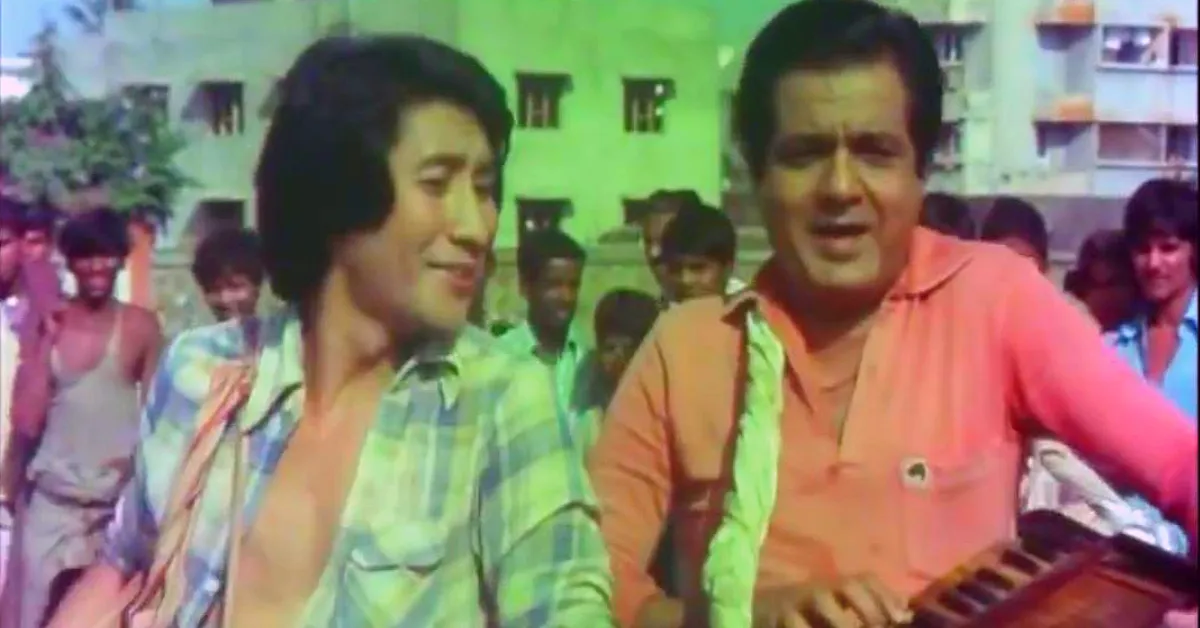
After nearly a decade of trying to establish himself in the film industry, television opened another door.
In the Doordarshan serial Intezaar in 1989, he played a Ladakhi character and also had the opportunity to sing Ladakhi songs. A few years later came Paramveer Chakra, in which he played Dhan Singh Thapa, the decorated soldier.
Television changed the equation. The screen was no longer only a place where he waited for someone to cast him. It became a medium through which he could bring more of himself into the work.
He began producing television programmes, making documentaries about Ladakh and working on government-sponsored films. He also produced a ten-episode series on the Ladakh Scouts.
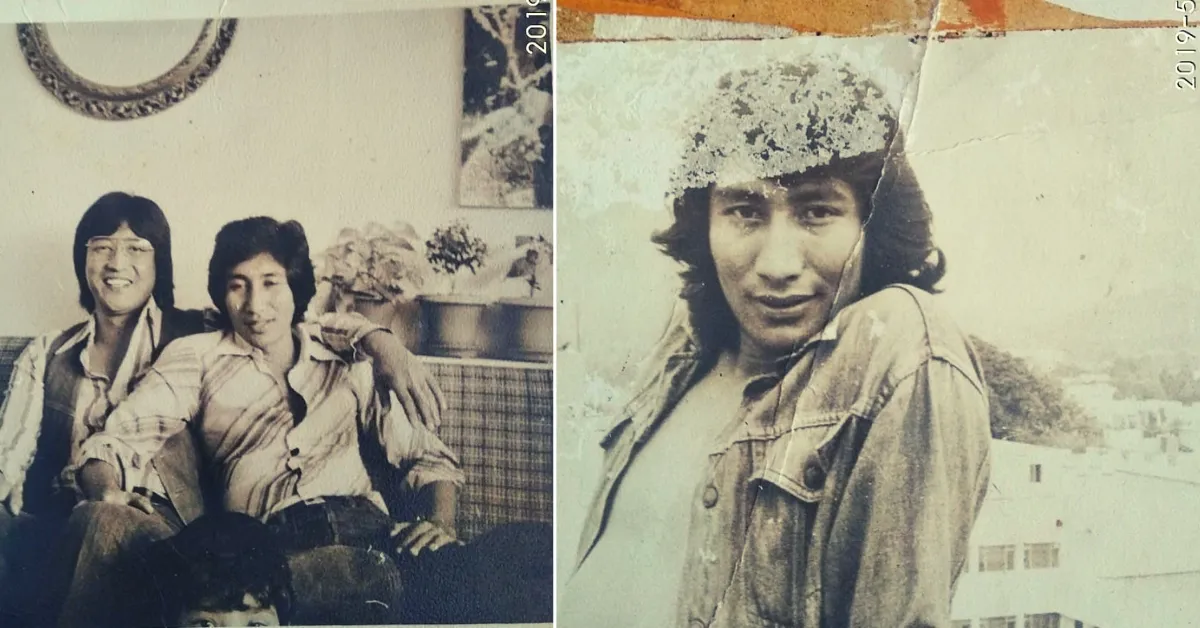
There was another Himalayan thread running through Phonsok's early ambition: Danny Denzongpa.
Danny had already broken through in Indian cinema after graduating from FTII. For Phonsok, his success mattered beyond celebrity. It proved that an actor from the Himalayan region could be taken seriously in Bombay.
The two eventually met, and their association became part of Phonsok's own story of entering the industry.
Phonsok has recalled that Danny's success changed how people viewed actors from the Himalayan region. It did not guarantee him the same career, but it made the possibility of belonging in that world feel less distant.
Music entered almost accidentally. During the difficult Bombay years, when acting work was scarce, Phonsok met a music teacher and began learning vocal techniques including sargam.
The skill stayed with him.
He eventually became an important figure in modern Ladakhi popular music, combining film-style ghazal influences with Ladakhi or Hindi lyrics and Tibetan Buddhist themes.
His work reached both Ladakhi and Tibetan audiences, creating a musical language that could move between communities.
He also composed Zinda Kaum, the regimental song associated with the Ladakh Scouts.
The acting career
became a doorway.
Music, film, teaching and culture came through it.
The most interesting part of Phonsok's story may be what happened after the ambition to become a star had softened.
Acting became a way of understanding the mind. He developed an approach to teaching that combines acting practice with yoga, Vipassana and Stanislavski's method.
He has worked as a screen-acting teacher and has been involved in acting education and programmes connected with FTII.
He has also taught beyond the classroom, conducting acting and yoga sessions and continuing his work across Ladakh and elsewhere.
His later career therefore became less about finding the next role and more about passing knowledge on.
The actor was only the beginning.
Phonsok Tsering Dimbir, popularly known as Phonsok Ladakhi, is a Ladakhi actor, filmmaker, singer and teacher. He trained at the Film and Television Institute of India and worked in Hindi films and television.
Yes. He entered the Film and Television Institute of India in 1972 and trained in acting before graduating in 1975.
His film work includes Khel Khilari Ka, Shalimar and Ramu To Diwana Hai.
His career expanded into television, filmmaking, documentaries, music, yoga and acting education.
He became associated with modern Ladakhi popular music as a singer and composer, alongside his work in cinema and television.
Phonsok Ladakhi went to Bombay looking for a place on a cinema screen. He found one, but the screen was only the first frame. The rest of his life moved through television, music, filmmaking, teaching, yoga and the culture of the place he had left behind. Perhaps that is the more interesting story: not an actor who failed to become a star, but an artist who kept finding new ways to speak.
