In Conversation · Lena Ladakh
A shawl from Lena takes twenty to twenty-five days to make. The label, which works with Changthang pashmina and a team of women artisans, would rather you didn’t treat that as the selling point.
Most of what has been written about Lena covers how it began and how a shawl is made, so we skipped both. We sent a set of questions about what hasn’t been followed up: what a “new pashmina identity” actually means, whether handmade can still mean anything when the word is everywhere, and what it is to make something in a Ladakhi winter that ends up on a stranger’s shoulders.
The answers below are lightly edited for clarity and grammar.
What did calling the label Lena commit you to?
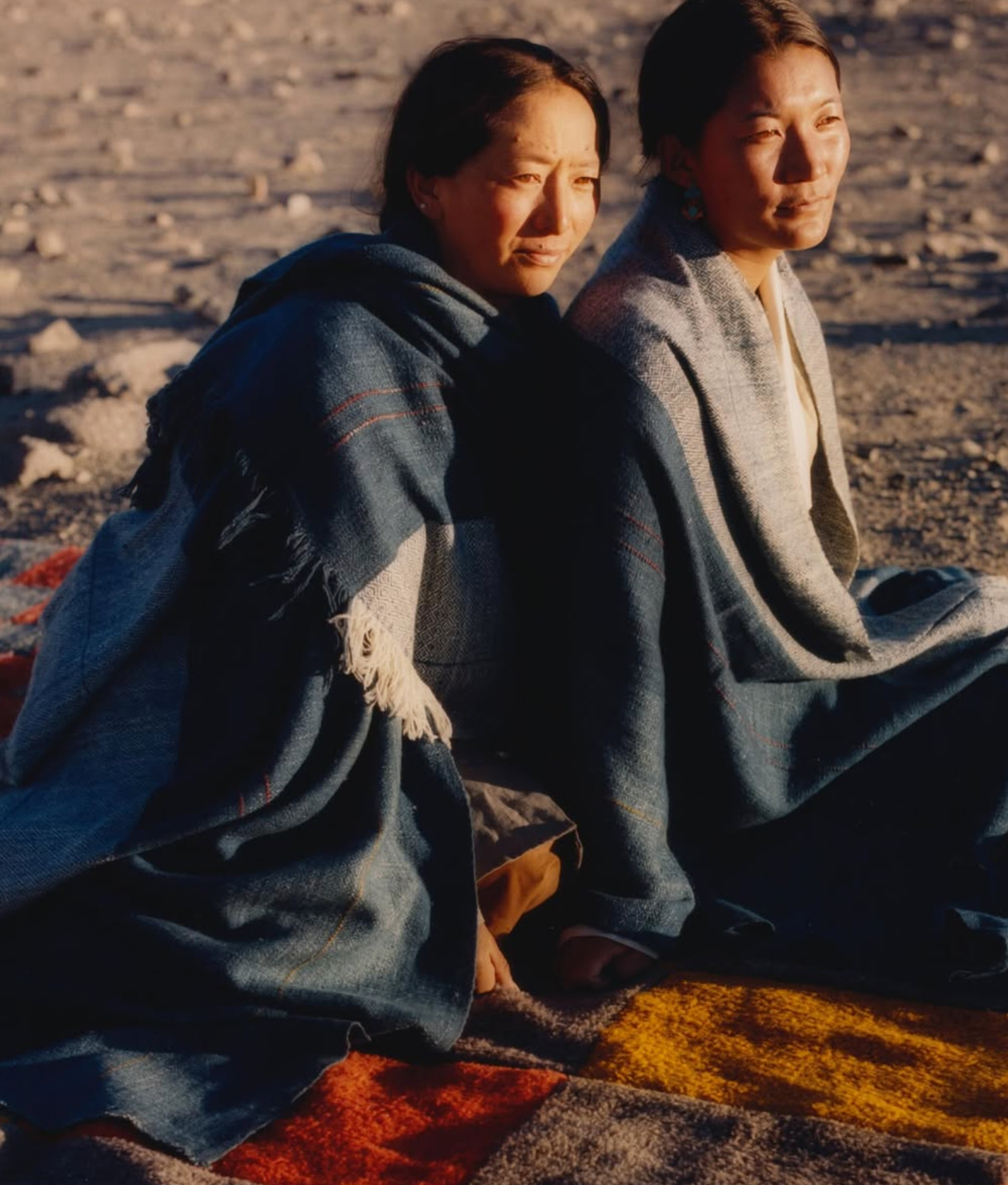
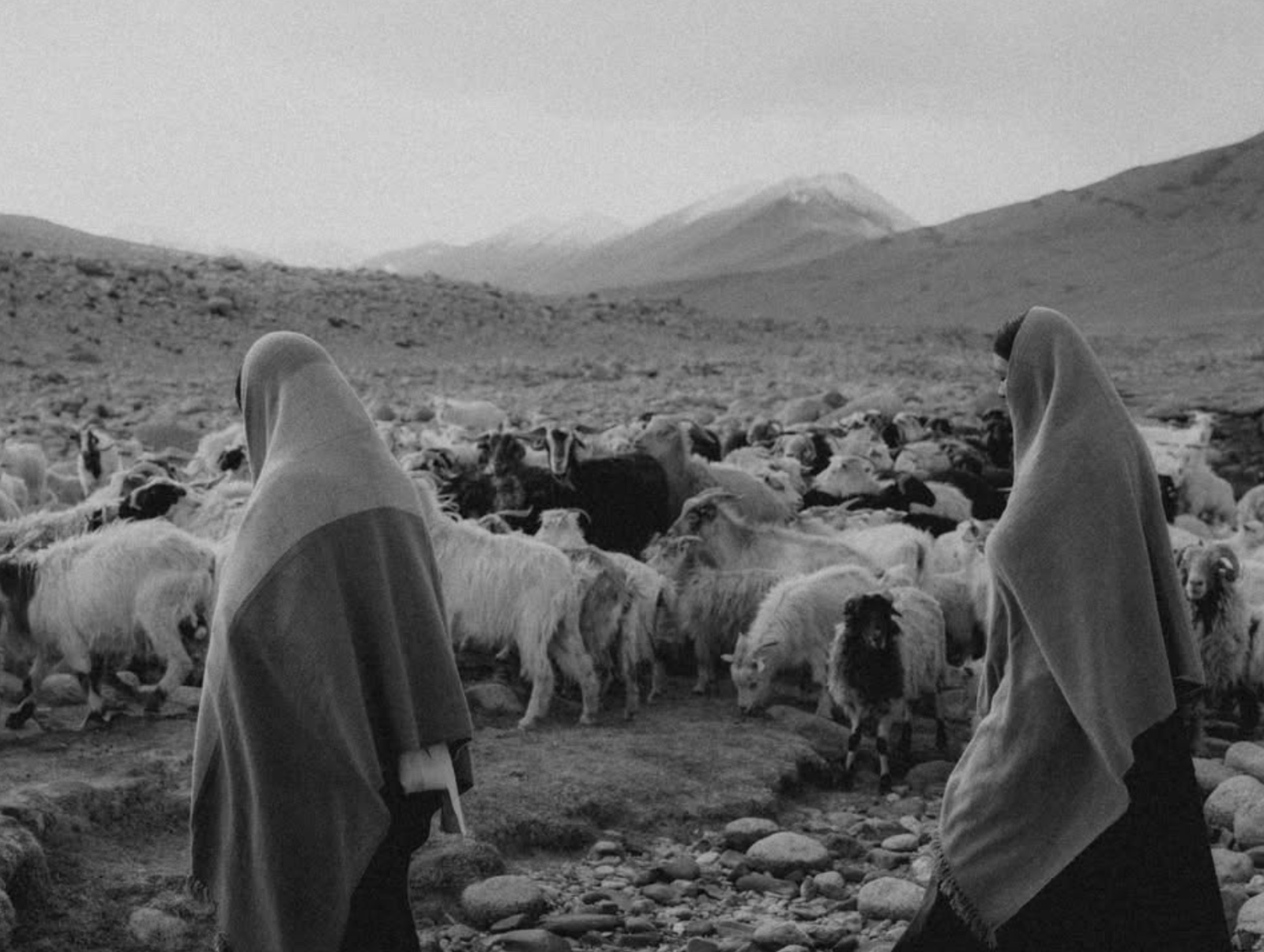
For us, Lena represents the people, land and culture behind the extraordinary fibre that is Ladakh pashmina. The name is not about the individuals who founded the company; it represents the many hands and lives involved in bringing a piece of textile into existence. From the herders who raise the livestock to the people who spin, dye, weave and finish the fabric, each contributes to its eventual character. Naming our label Lena is a way of keeping this collective heritage at the centre of our work, rather than placing the focus solely on the finished product or the brand itself.
You’ve spoken about creating a new pashmina identity rather than preserving the old one. What does that look like?
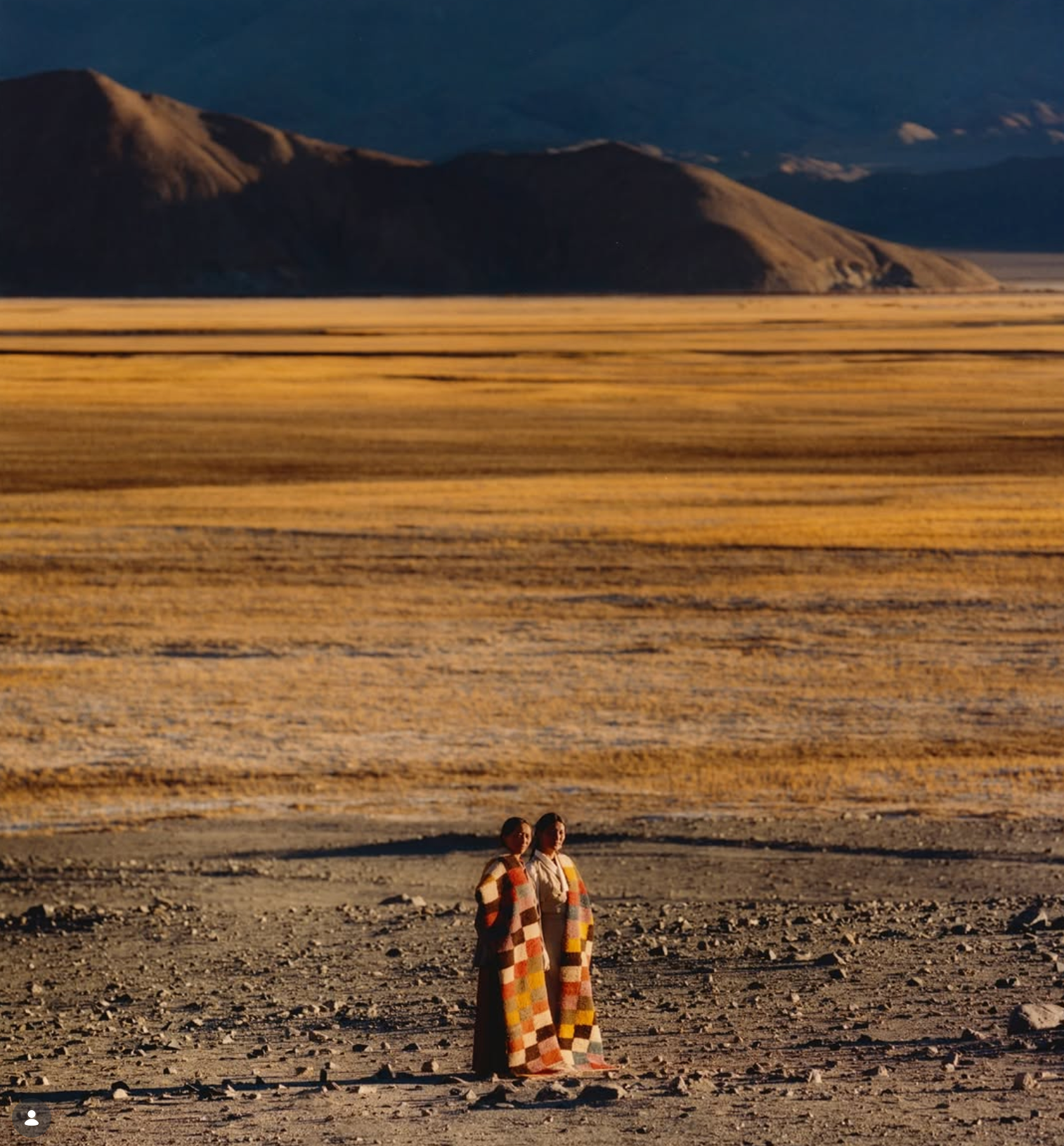
Creating a new identity does not mean moving away from our roots; it means allowing our textile traditions to evolve. We work with the same local fibres and traditional techniques, but explore new possibilities through colour, texture, pattern and the way these elements come together. Our use of natural dyes allows us to explore a palette inspired by both the landscape and the wider world of plants. We see tradition as something living, which can grow and adapt while remaining connected to the people, land and knowledge from which it comes.
Who decides what a shawl will look like, and when is the design actually fixed?
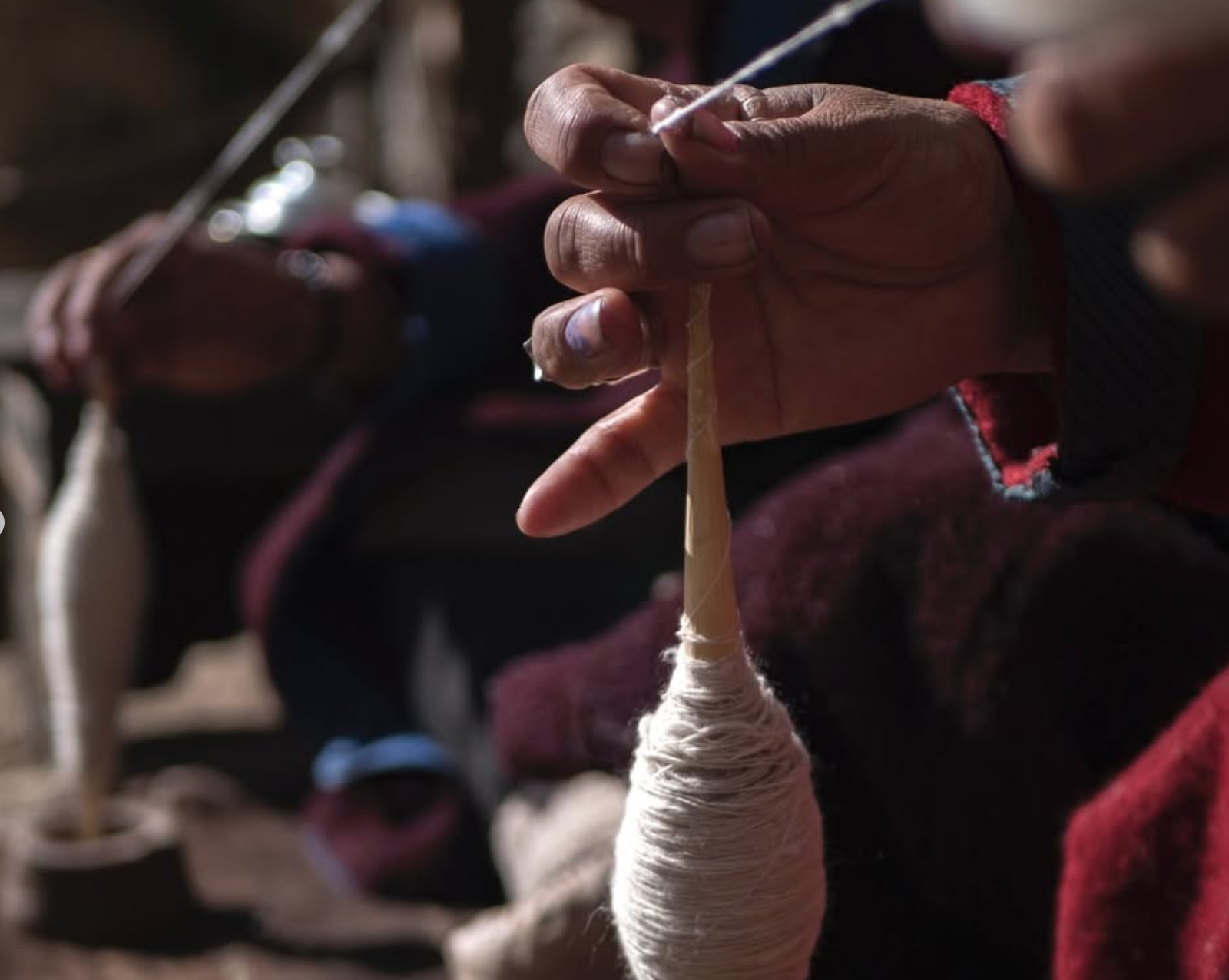
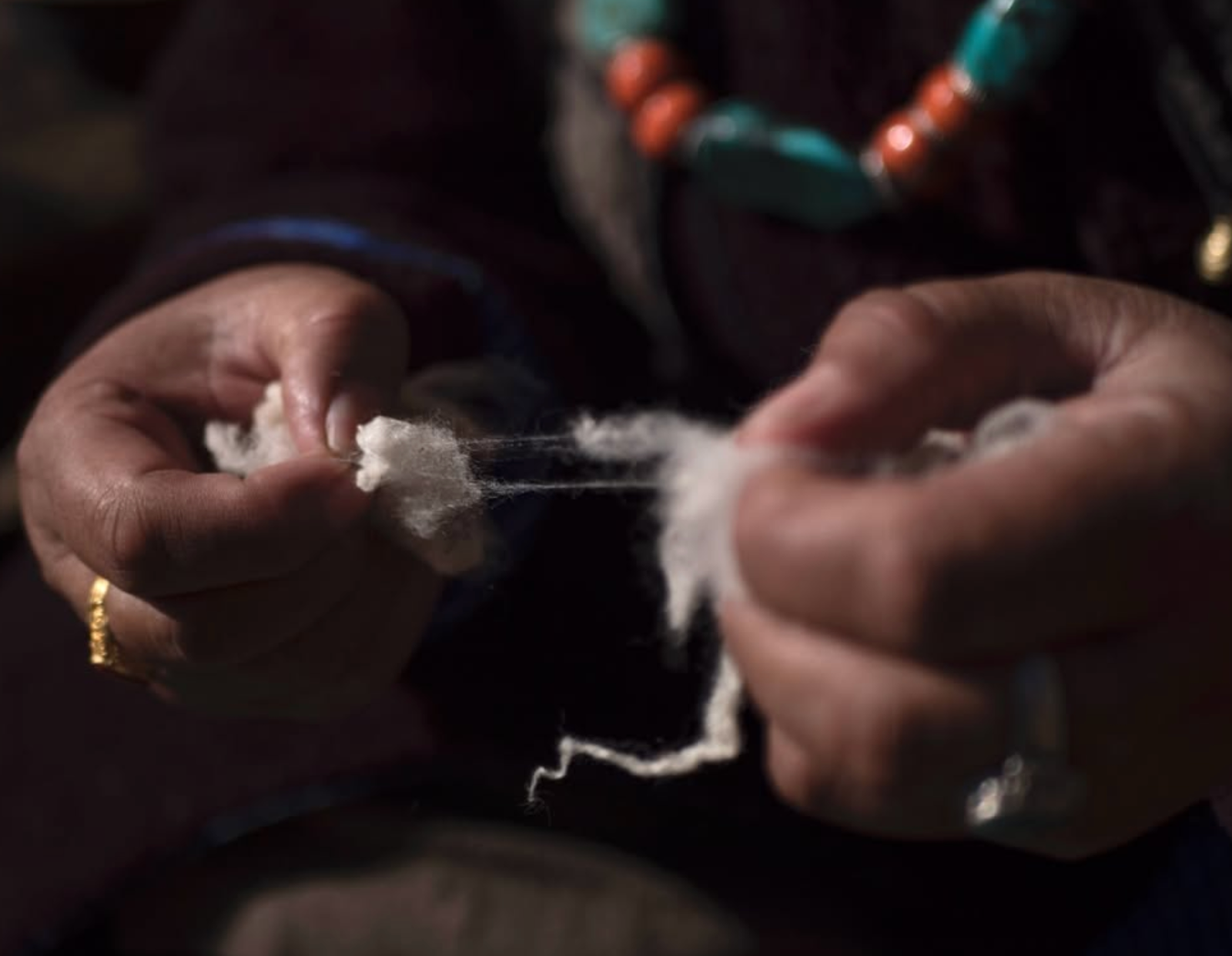
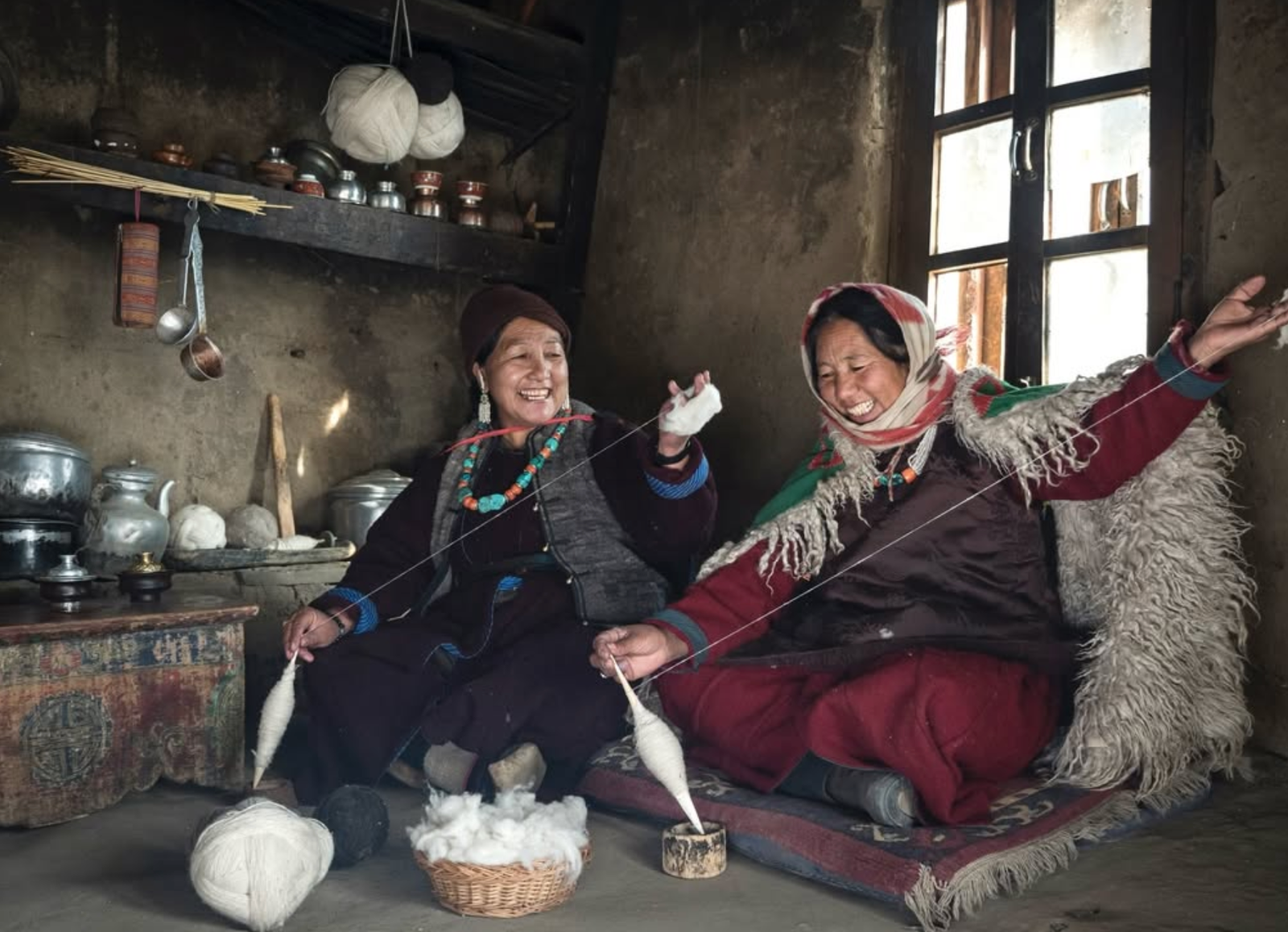
A pashmina shawl passes through several stages: handspinning the fibre, hand-plying the yarn, natural dyeing, weaving and finishing. Together, these take approximately twenty to twenty-five days for a single piece. The design evolves through this sequence rather than being determined entirely at the outset. The colours we work with inform the composition, and during weaving, their placement and sequence establish the final pattern. While we have a design direction in mind, the handmade process leaves room for the material, colours and techniques to shape the outcome.
Does the fabric differ depending on whose hands spun it?
When we first started, there were noticeable differences in yarn thickness depending on who had spun it. Over the years, our spinners have developed the experience and skill to maintain greater consistency. This has been an important part of our collective learning process. Handspinning remains a skill that requires practice, sensitivity and an understanding of the fibre, and each artisan brings her own experience to it.
You learned natural dyeing in Uttarakhand. What did you take from that?
When we began exploring natural dyeing, we found very few practitioners in Leh from whom we could learn, so we travelled to Uttarakhand to acquire the initial knowledge. One of the most important lessons was that natural dyeing is a process of continuous learning. Not every outcome can be predicted, and sometimes what appears to be an error can lead to a beautiful result. However, experimentation must rest on a sound understanding of the fundamentals. We learnt to distinguish between the aspects of the process that can be explored creatively and those that are non-negotiable for achieving a reliable result.
“Slow textile” has been absorbed by a lot of brands that aren’t slow. Is it still useful to you?
I think the term has become diluted, particularly as more brands use sustainability language without necessarily changing their production practices. For us, slow textile is not a marketing concept; it is simply how we work. Our fabrics are handspun, handwoven and naturally dyed, and our production is deliberately limited. We also reuse and recycle dyeing water wherever possible. Rather than treating slowness as a selling point, we see it as a consequence of the choices we have made about how our textiles should be produced.
Rather than treating slowness as a selling point, we see it as a consequence of the choices we have made.
Lena LadakhBuyers are partly paying for those twenty-five days. Does it trouble you that the slowness has become part of the product?
For us, the time taken to make a textile is a natural consequence of our methods, rather than something we have deliberately turned into a product feature. Customers are paying for the labour and skill that go into the shawl, as well as the fibre itself. But we do not want slowness to become an end in itself or simply another marketing device. A well-made handmade textile can last for years, be cared for and repaired, and eventually become an heirloom. Its value lies not only in the time taken to make it, but in the life it continues to have long after it leaves our studio.
If a machine could make a fabric indistinguishable from yours, would something still be missing?
Would a buyer be able to feel the difference? Perhaps not always through touch alone. Some of the value lies in understanding the journey of the textile and the people behind it. A handmade piece carries a human history that goes beyond its physical specifications, and that history is an important part of what we want our customers to recognise.
Changthang
People · Practice · Place
You’ve said the Changpa should be recognised as weavers, not only as nomadic shepherds. Why does the name matter?
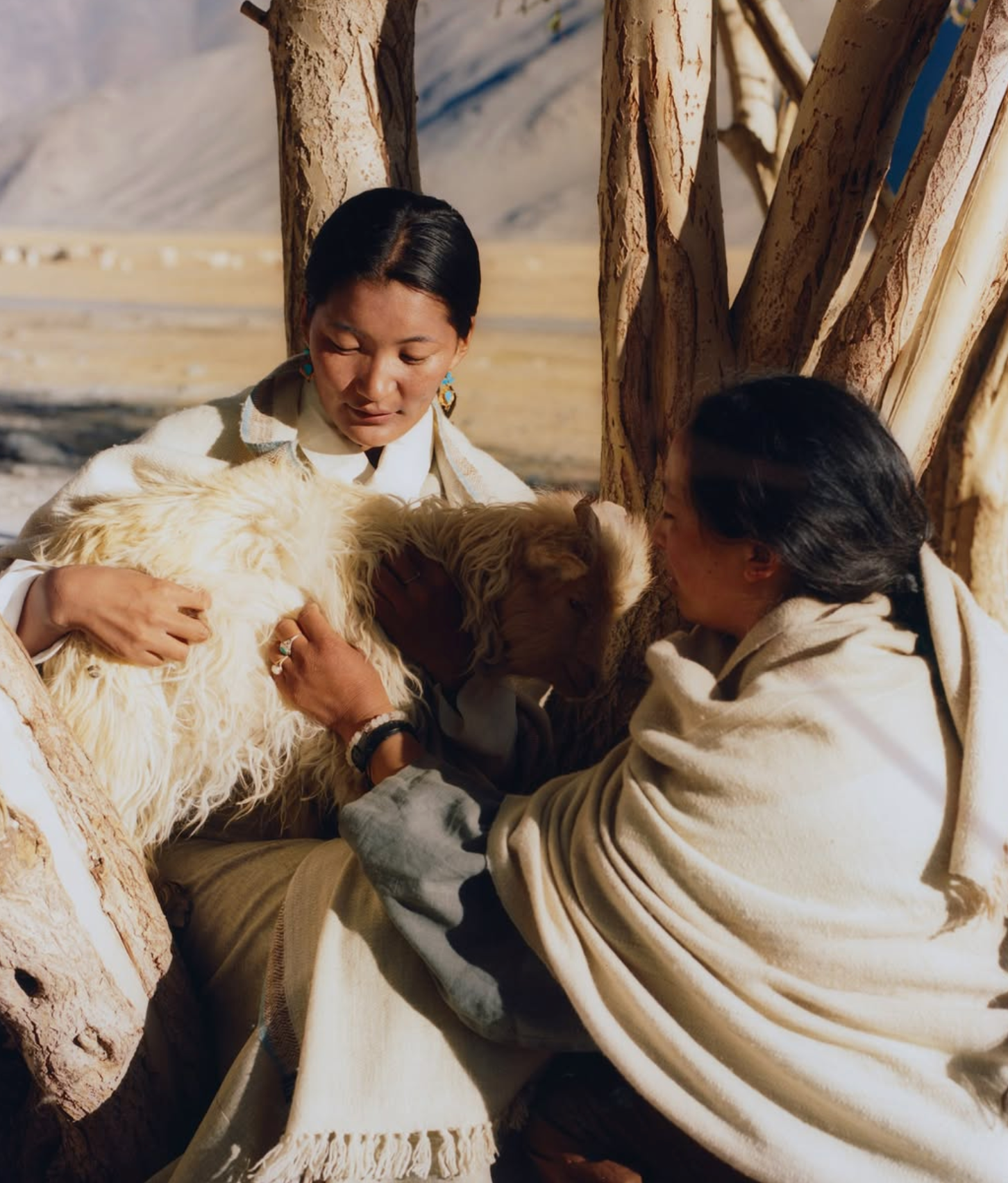
The Changpa community of Changthang has a long history of intricate and complex weaving. Traditionally, the community has been largely self-reliant, using wool from its own livestock to weave textiles for everyday life. Yet the weaving knowledge and techniques of these communities have not received the recognition they deserve. Recognising them as indigenous weavers brings attention to a vital part of their cultural and technical heritage. At Lena, we continue to work with our backstrap-weaving team to practise these traditional techniques and pass them on to younger artisans. Naming the skill correctly is an important step towards giving the people who hold this knowledge the recognition and value they deserve.
Young people are leaving places like Kharnak. Can a textile label do anything about that?
The demanding nature of pastoral life, combined with limited access to education, healthcare and other opportunities, makes urban migration understandable. A textile enterprise cannot address all these structural challenges on its own. However, we have also seen young people from these communities build livelihoods and careers around their own fibre, livestock and traditional knowledge. Our team includes artisans from nomadic communities who carry knowledge of older weaving techniques and patterns, some of which are at risk of being lost. It may not prevent migration, but it can create another possibility: one in which traditional knowledge is valued, provides an income and remains a viable part of the future.
Has climate change affected the fibre?
Climate change is increasingly affecting the conditions in which livestock are raised. We have observed more erratic patterns of snowfall and rainfall, which can create difficult conditions for animals and, at times, contribute to higher mortality among young sheep and goats. So far, we have not observed a noticeable change in the fineness of the pashmina fibre we work with. However, the longer-term effects on livestock, pastoral livelihoods and the fibre itself remain important to watch.
Your first international retailers found you on Instagram. A label built on handspinning reaches the world through an algorithm. How do you think about that?
Social media has made marketing and networking considerably more accessible. Through platforms such as Instagram, we can share our work, the processes behind our textiles and the stories of the people who make them with audiences across the world. There is an interesting contrast between the traditional, time-intensive processes we practise and the digital platforms through which our work travels. But I see these tools as a means of creating connections, rather than a contradiction of our values. We also remain aware of our dependence on systems whose reach and rules we do not control.
Does the history of exchange along the Silk Road make an “authentically Ladakhi” textile harder to define?
Textile traditions, like ideas, spices and materials, have travelled across regions along ancient routes such as the Silk Road. These exchanges have shaped the traditions we often think of as belonging exclusively to one place. I find this makes the idea of multicultural influence on authentic Ladakhi textile more interesting, rather than less meaningful. Authenticity need not mean that a tradition has remained untouched by outside influences. It can also be understood through the knowledge, materials, skills and cultural context that give a textile its character in a particular place.
Authenticity need not mean that a tradition has remained untouched by outside influences.
Lena LadakhIs a revived tradition the same tradition?
Natural dyes were traditionally used in Ladakh, although the practice had become less prevalent. Historically, Ladakh’s economy was largely subsistence-based, and textiles were made primarily to meet everyday needs. At Lena, we see our work as building on this existing knowledge and giving natural dyeing a stronger place in contemporary textile-making. A revived tradition may not be identical to the way it was practised in the past, but that does not make it less meaningful. Traditions have always evolved in response to changing needs. What matters is that the knowledge continues to be practised, remains connected to local materials and skills, and can be carried forward by future generations.
Can an object become an heirloom in a family it has no history with?
I believe an heirloom is created through the relationship that develops between an object and the people who live with it. The history of the makers and the place where a textile was produced is one part of that relationship, but the sentiments of the person who acquires it matter just as much. A shawl may be purchased as a gift, worn through different seasons, carried on journeys and gradually become part of someone’s everyday life. They may care for it, mend it when it wears, and eventually pass it on to another generation. It may have begun its journey in Ladakh, but the experiences and memories attached to it elsewhere become part of its story.
What would you want a young Ladakhi to think on seeing a Lena shawl?
I would hope that a young Ladakhi sees more than a finished textile. I would like them to recognise the local fibre, the plants that provide natural dyes and the people whose lives and knowledge are connected to the high-altitude landscape of Changthang. I would also like them to recognise that choosing such a product is a meaningful economic decision. It supports local livelihoods, helps sustain traditional skills and contributes to the regional economy. At a time when fast fashion and mass production dominate so much of the market, I hope young people see locally made textiles as a valuable alternative.
We asked Lena what question people ask most often. Their answer is the most practical thing in this conversation.
For Lena, approximately twenty to twenty-five days for a single piece. The work passes through five stages: handspinning the fibre, hand-plying the yarn, natural dyeing, weaving and finishing. The design is not fixed at the outset; it develops through the sequence as colours and weaving shape the pattern.
No. According to Lena, passing a shawl through a ring is not a reliable way to establish purity. Laboratory testing is the appropriate way to verify a fibre’s composition.
Ask for lab certification of the fibre composition, ask where the fibre came from, and ask how the textile was made. Softness alone is not a guide, since many fabrics sold as pashmina feel remarkably soft.
The Changpa are the community of Changthang, usually described as nomadic shepherds. Lena points out that they also have a long history of intricate weaving, traditionally using wool from their own livestock to make textiles for everyday life, and that this knowledge has not received the recognition it deserves. Lena works with a backstrap-weaving team and aims to pass these techniques on to younger artisans.
Yes, although it had become less prevalent. Lena describes its own work as building on that existing knowledge. Because few practitioners could be found in Leh, the label learned the initial techniques in Uttarakhand.
Continue the story
Explore the textiles, the people behind them, and the traditions that continue to shape the label.
Follow on Instagram ↗Kesaar Editorial is the journal of Hotel Kesaar Palace, Leh. Photographs courtesy Lena Ladakh. Hotel Kesaar Palace is on Fort Road in Leh.
