
The Ice Man of Ladakh
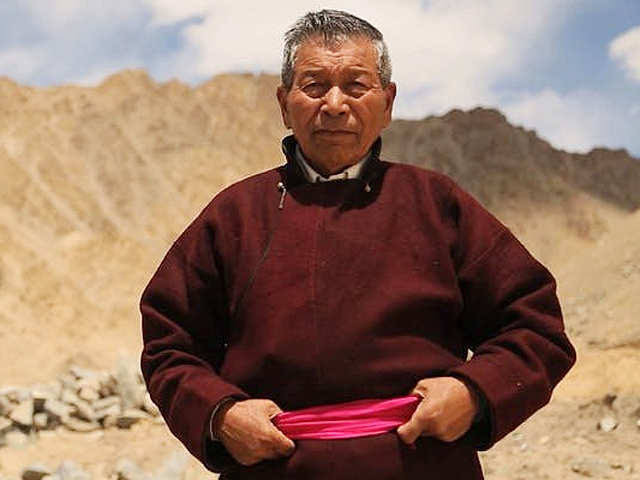
Chewang Norphel spent four decades building roads, bridges and irrigation systems across Ladakh. Then he began building something stranger: glaciers that melted when farmers actually needed the water.
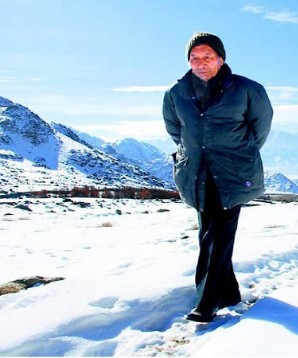
In Ladakh, the problem was never simply that there wasn't enough water. There was water. There was snow. There were glaciers. The trouble was that much of it arrived in the wrong month.
By the time the fields needed water in spring, the natural glaciers high above the valleys were still holding onto it. By the time they released it, the growing season was already moving on.
Chewang Norphel's solution was remarkably simple in principle: slow the water down, freeze it lower in the valley, and let the resulting ice melt earlier.
“The problem was not water.
It was timing.”
An engineer's answer to a Himalayan calendar.
Born in the mid-1930s in Leh, Norphel studied science at Amar Singh College in Srinagar before becoming a civil engineer with the Jammu and Kashmir rural development department.
He began government service in 1960 and retired in 1996. Over those decades his work took him through the ordinary infrastructure of Ladakh: roads, culverts, bridges, buildings, irrigation systems and village water projects.
His most famous idea began with something much smaller.
He noticed water dripping from a tap left running through winter so that the pipe would not freeze and burst. The water fell to the ground and froze there.
The observation was almost absurdly obvious once seen: the water was already freezing. It simply wasn't freezing anywhere useful.
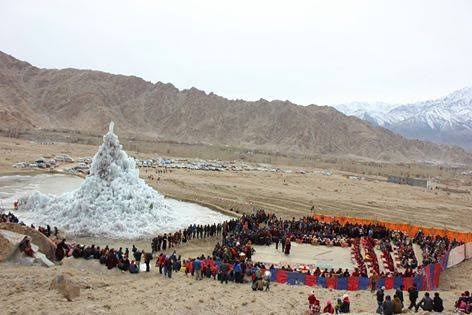
Norphel's artificial glaciers are not glaciers in the geological sense. They are engineered fields of ice. A stream is diverted towards a valley and slowed with a series of check walls. Instead of rushing away, the water spreads, slows and freezes in layers.
The crucial decision is where to build them. Natural glaciers can sit around 18,000 feet above sea level. Norphel's structures are generally constructed considerably lower, around 13,000 feet.
That difference changes the calendar.
The lower ice begins to melt earlier, with water reaching fields around April — close to the point when farmers need to prepare their land. The invention therefore isn't simply a machine for storing water. It is a machine for storing it until the right month.
By 2012, Norphel had built twelve artificial glaciers according to one of the better-documented accounts of his work. His largest, at Phuktsey village, was reported at approximately 1,000 feet long, 150 feet wide and four feet deep.
It served a village of around 700 people. The same account put its construction cost at approximately ₹90,000.
His wider work extended beyond the ice itself. He has been credited with building more than 300 irrigation canals and bringing water to tens of thousands of acres.
There is an earlier story that says something important about the kind of engineer Norphel was.
Posted to Zanskar as a Sub Divisional Officer in 1966, he found himself without enough skilled labour to build the schools, bridges and canals the villages needed.
So he did the masonry himself.
More importantly, he trained villagers to work alongside him. Years later, he returned to find some of the men he had taught had become accomplished masons, earning good wages from the skills they had acquired.
He did not only leave
infrastructure behind.
He left people who knew how to build it.
The point of an artificial glacier is not the ice. The point is everything that happens after it disappears.
In villages supplied by the systems, farmers have been able to extend the growing season and, in some places, grow two crops where one had previously been possible. Potatoes and peas can provide more valuable harvests than traditional barley, while additional water can make valleys greener and reduce the need to move animals into higher mountain grazing areas.
There is a demographic effect as well. If farming becomes capable of supporting a family for longer, leaving for the city is no longer the only obvious future for a young person.
That may be the most useful way to understand Norphel's work: not as an unusual piece of engineering, but as an attempt to make a village viable.
A different way to think about a tap in Leh.
Chewang Norphel is a Ladakhi civil engineer and water conservation pioneer known for constructing artificial glaciers and irrigation systems. He worked with the Jammu and Kashmir rural development department from 1960 until his retirement in 1996 and received the Padma Shri in 2015.
Stream water is diverted into a valley and slowed using check walls. During winter the water freezes into layers of ice. Because the structure is built at a lower elevation than natural glaciers, it can begin melting earlier in spring.
Timing. Natural glaciers at very high elevations can hold their water until later in the season. Lower artificial glaciers can melt earlier, helping water reach agricultural land when farmers are preparing their fields.
Norphel has described noticing water from a tap freezing on the ground during winter. The observation suggested that water could be deliberately slowed and frozen somewhere useful rather than simply allowed to flow away.
Chewang Norphel was awarded the Padma Shri in 2015 for his contribution to water conservation and rural development.
Ladakh is often described as a place where water is scarce. A better description might be that water keeps its own calendar. Chewang Norphel spent much of his life learning how to change it — slowing a stream, freezing it on the valley floor, and waiting for the ice to disappear at exactly the moment a field needed it.
