
Kushok Bakula Rimpochee Airport
The building is new. The altitude, and what your body does about it, is not.
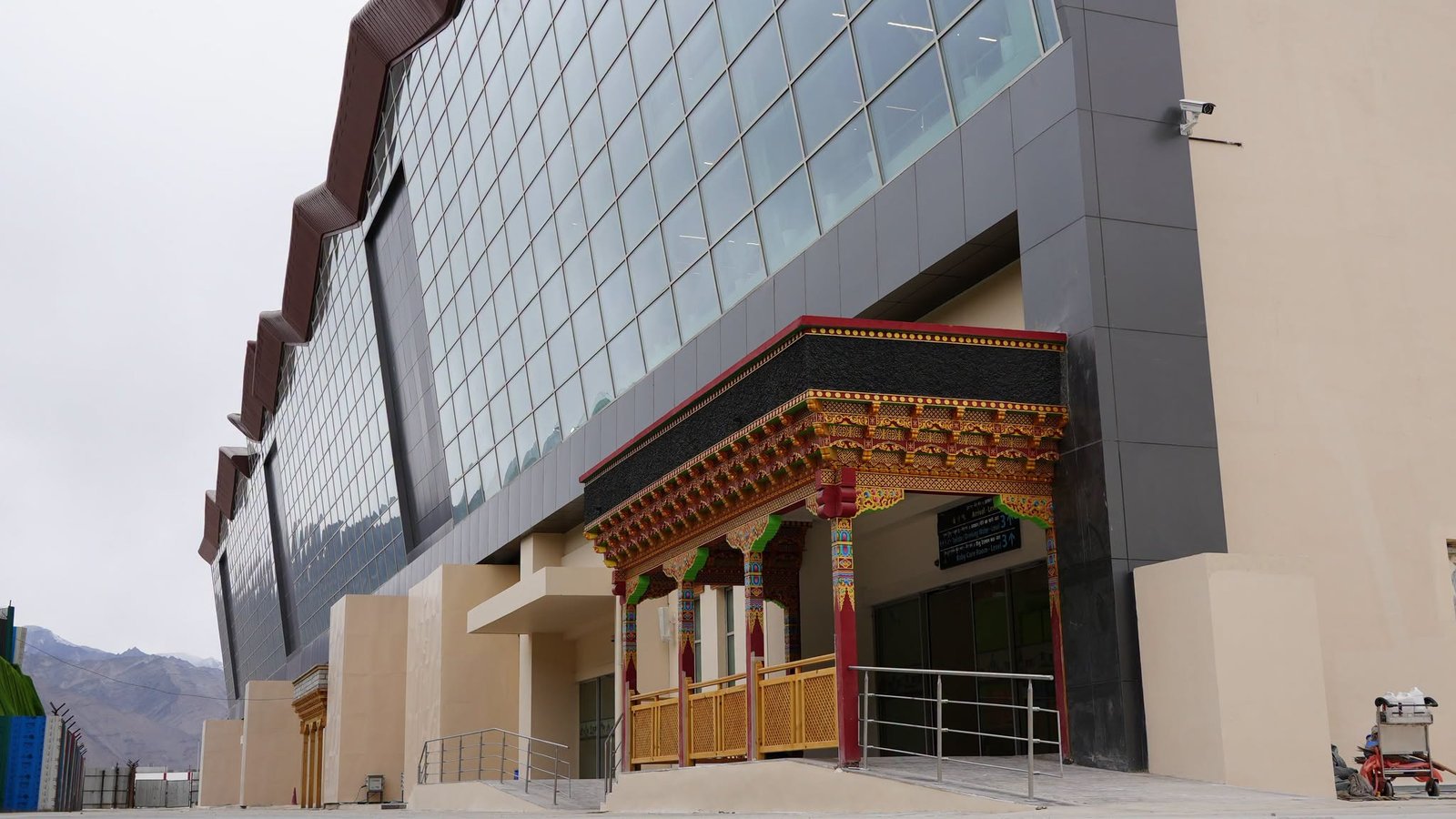
On Thursday 15 October, Prime Minister Narendra Modi inaugurated the new passenger terminal at Kushok Bakula Rimpochee Airport by video link, one of five projects in Ladakh worth about ₹3,350 crore. For most people who read this journal, the question is a simple one: what is different when you step off the aircraft? Here is what we know, what we don’t, and what no building can change.
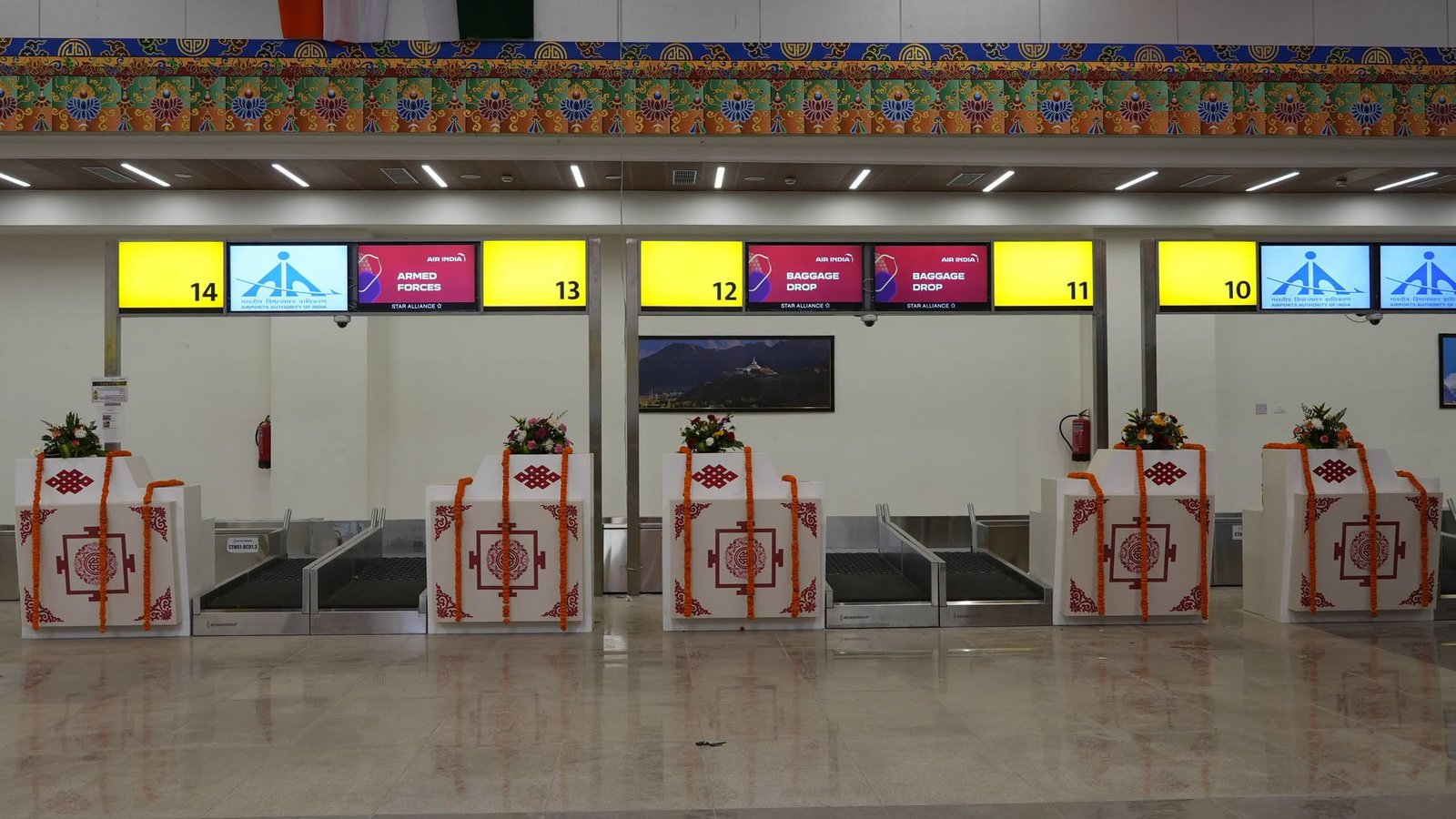
The ₹640-crore terminal is being built in two phases. According to project details reported in April, the first phase includes 20 check-in counters, an inline baggage handling system, two arrival carousels, 15 lifts, 12 escalators and a 700 kWp rooftop solar installation. It is designed for 2,000 passengers in the peak hour.
The floors are heated using geothermal energy, which project reports describe as a first of its kind for an Indian airport. In a high-altitude terminal in winter, that is the feature most travellers will actually notice. Traditional Ladakhi motifs have also been worked into the building.
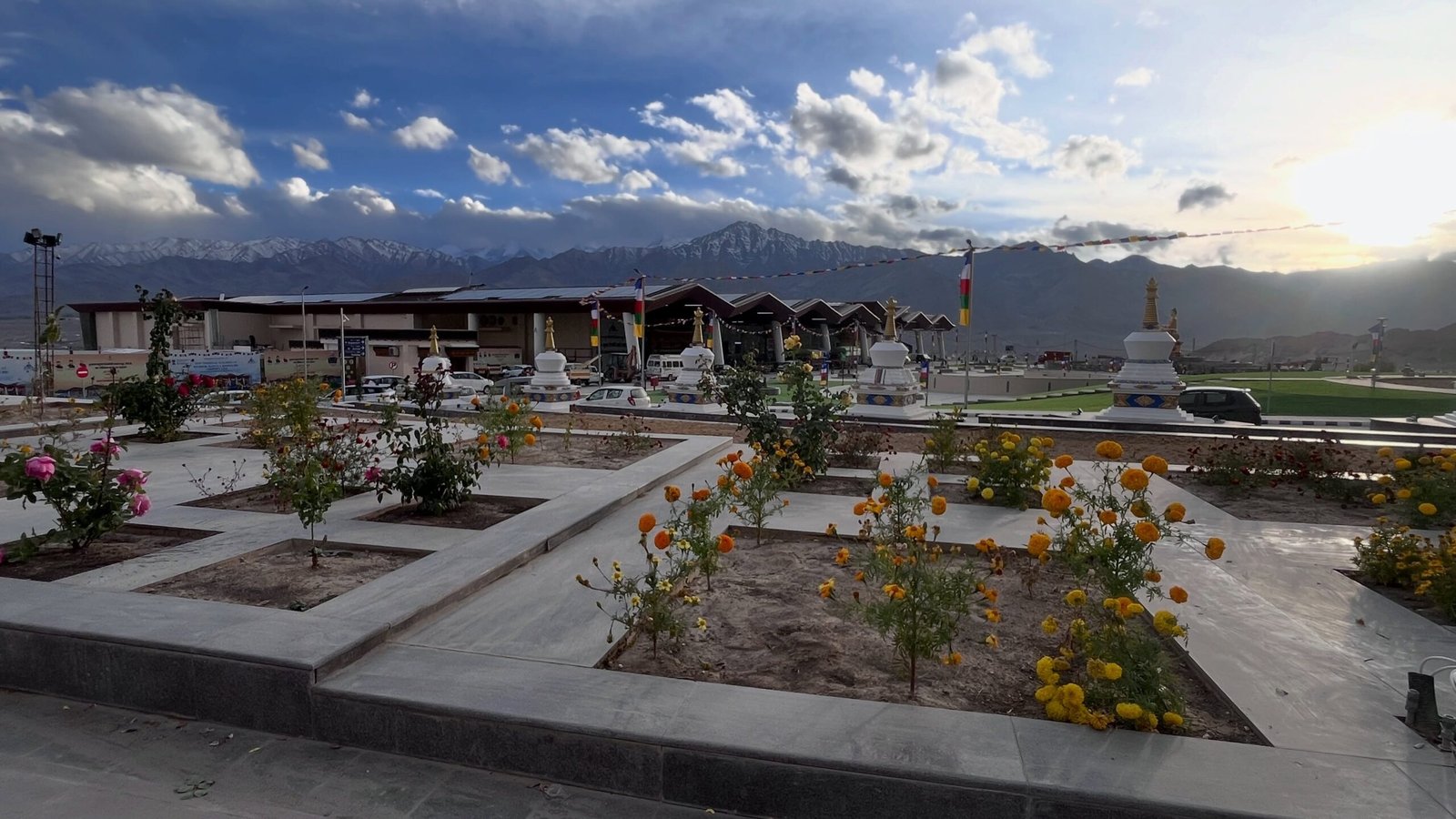
You have just gone from near sea level to 3,256 metres, about 10,680 feet, usually in under two hours. The UT administration’s advice for these first hours is the same whichever building you land in.
Our advice for the hour itself is plainer still. Walk slowly. Use the lifts. Collect your bags without hurrying. The hotel is a short drive from the airport, so there is no reason to rush anything. Go straight to your room, drink water and lie down.
A new terminal makes the logistics easier. It does nothing for the altitude.
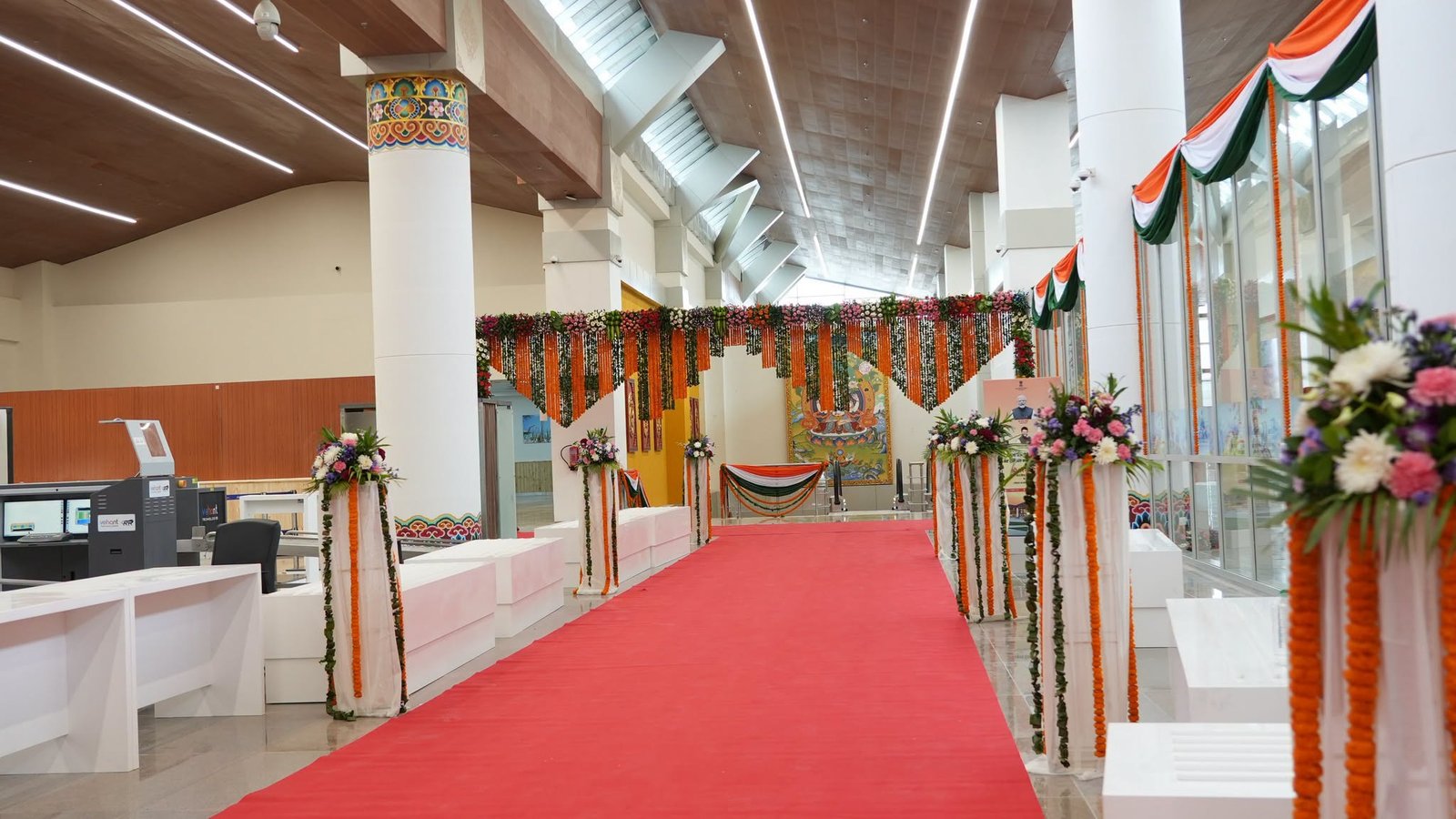
Inauguration is not the same as the first passenger walking through the doors. In the coverage we have seen, no date has been published for when airlines move their operations into the new terminal. The second phase, which demolishes the old terminal to make room for four more aircraft bays and three aerobridges, is still ahead.
If you are flying in over the coming weeks, check with your airline before assuming which terminal you will use. We will update this post when a date is confirmed.
The advisories ask every arrival to spend at least 48 hours in Leh before going higher. That means no Khardung La, no Pangong and no Nubra on the morning after you land. The Ladakh tourism advisory also notes that SNM Hospital in Leh provides emergency oxygen support. It mentions preventive medication too, which is a conversation to have with your own doctor before you travel.
A faster, smoother arrival makes this advice matter more, not less. It is easy to feel fine at the baggage carousel and overdo the second day.
The airport handled around 1.19 million passengers in 2023–24. A terminal designed for 3.5 million a year is a large step up, and officials say capacity will rise from about 18 flights a day to 54 once the second phase is complete.
A terminal is only one of the things that limits flights, though. Reporting last year noted that Leh’s airfield is shared with the Indian Air Force, and that afternoon slots are taken by military flying, which restricts civil operations. The same reporting listed an alternative runway for fighter aircraft as a pressing need. We have not seen that constraint announced as changed, so a bigger building does not on its own mean 54 flights a day.
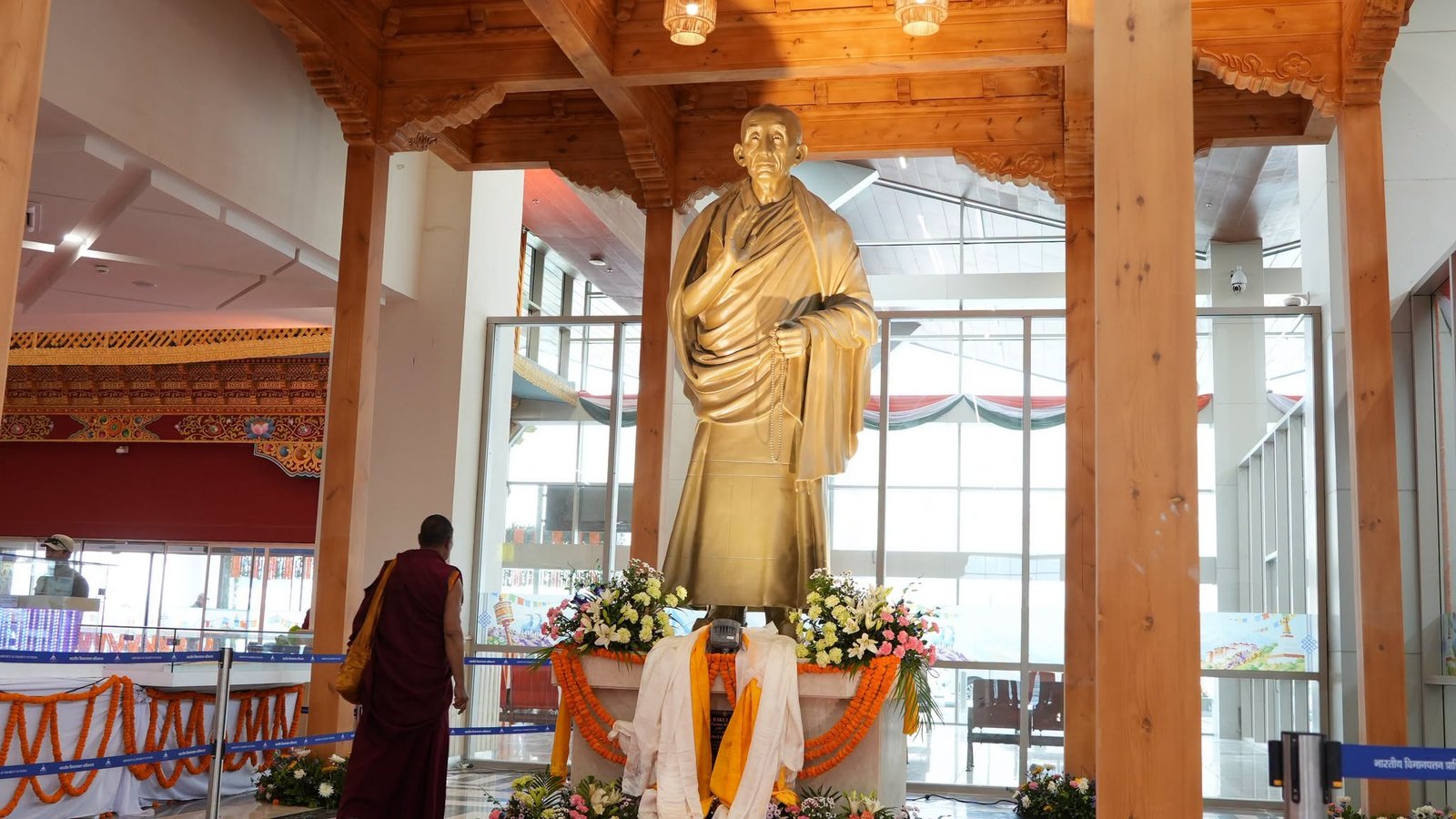
The airport has carried the name of the Nineteenth Kushok Bakula Rinpoche, the monk and statesman from Ladakh, since 2005. We wrote about Samstanling in Nubra, the monastery where he spent his childhood winters, in our Monastery Trails series.
The same event dedicated the 298-km Nimmu–Padum–Darcha road through Zanskar, built by the Border Roads Organisation. It adds a third route into Ladakh alongside the Srinagar and Manali highways, though the Shinku La section remains seasonal. It also opened India’s first Petroglyph Conservation Park, at Sindhu Ghat in Leh, and 40 village water bodies under Project Him Sarovar, the scheme behind the pond works we covered at Stok.
Terminal arrangements are changing. Check before you fly.
It was inaugurated on 15 October 2026. In the coverage we have seen, no date has been published for airlines moving their operations into it, so check with your airline before you fly.
According to project details, the first phase has 20 check-in counters, an inline baggage system, two arrival carousels, 15 lifts, 12 escalators, a 700 kWp rooftop solar installation and geothermally heated floors. It is designed for 3.5 million passengers a year.
Officials say capacity will rise from about 18 flights a day to 54 once the second phase is complete. The airfield is shared with the Indian Air Force, which has limited afternoon civil operations, and we have not seen that constraint announced as changed.
The UT Ladakh and LAHDC Leh advisories say to rest completely on the first day, avoid strenuous activity for two days, avoid alcohol and smoking for 48 hours, and spend at least 48 hours in Leh before travelling higher.
If you are staying with us, tell us your flight details and we will plan your transfer and first day around them. Keep the first day slow. The mountains will still be there on day three. Hotel Kesaar Palace is on Fort Road in Leh.
